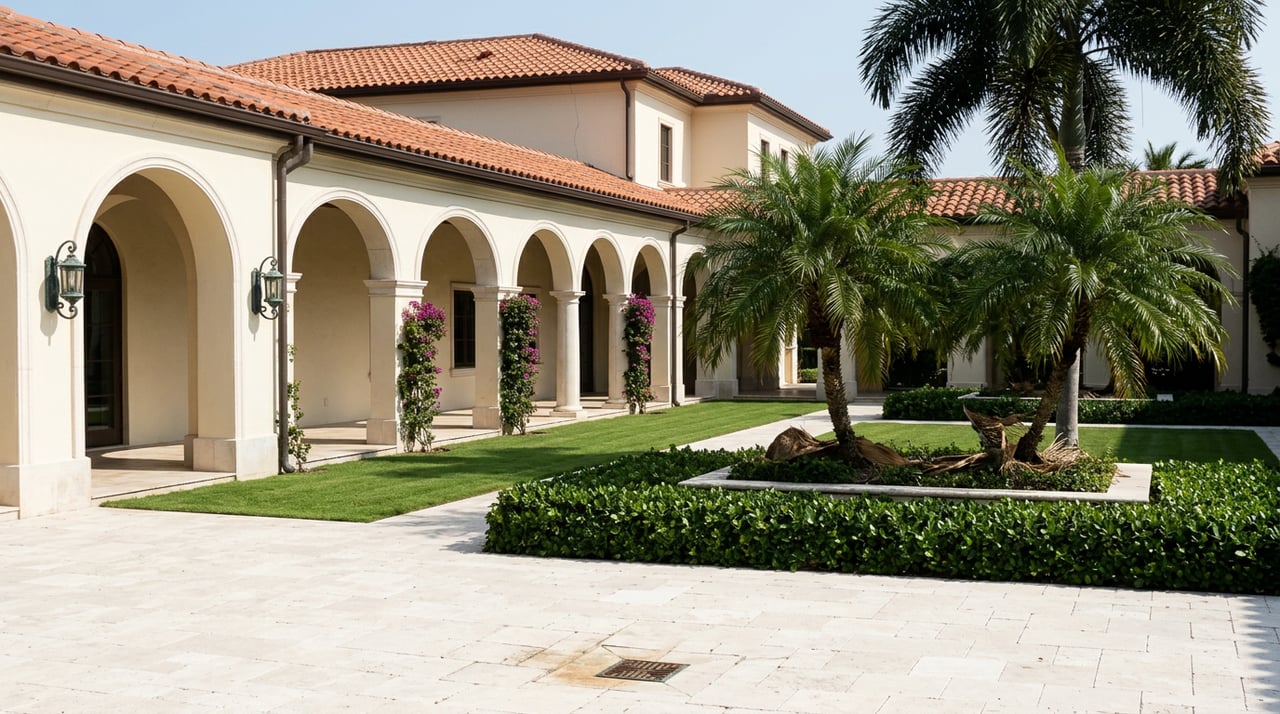
On September 26, the Village of Key Biscayne, the Key Biscayne Community Foundation, and the Key Biscayne Chamber of Commerce are throwing a party to mark 35 years since the island incorporated as its own municipality in 1991. There will be a Vendor Village built around local businesses, nonprofits, and creators, and the kind of turnout an island this size only sees a few times a year. What most people showing up will not clock, at least not right away, is that the festival lands in the middle of two very different clocks running on the same six-mile stretch of Crandon Boulevard. One just finished. The other is only getting started.
The Anniversary Everyone Will See
The 35th Anniversary Community Festival is a joint production, not a single agency's calendar item. The Village, the Community Foundation, and the Chamber of Commerce are running it together, which is itself a small tell about how this island operates: nothing civic here happens through one office. The festival's Vendor Village is built specifically to put the island's own small businesses and nonprofits in front of the crowd rather than importing outside vendors, a choice that matters more this year than most, since the two institutions residents actually associate with permanence on Key Biscayne are in the middle of the most visible transitions either has seen in decades.
That is the part of the story worth slowing down for.
The Landmark That Came Back First
The Ritz-Carlton Key Biscayne closed in May 2025 for its first major renovation in nearly 25 years and reopened on December 8, 2025, after a $100 million overhaul of guest rooms, the spa, and the resort's dining program. Seven months, start to finish, for a private capital project that touched all 421 rooms and rebuilt six restaurants from scratch.
The headline replacement is Luma, a 310-seat Italian dining room helmed by Executive Chef Patrizio La Gioia, whose résumé runs through Per Se in New York and I Portici in Bologna. Luma serves breakfast from 7 to 11 a.m., dinner from 5 to 10 p.m., and a weekend brunch called La Dolce Vita from 12:30 to 3:30 p.m., built around handmade pastas and a Josper oven program finished over binchotan and oak coals. It replaced Lightkeepers, the restaurant that had occupied that room for years, and it did so as part of a coordinated relaunch rather than a quiet swap.
The second new room, Paralía, took over the old Cantina Beach space with an open-air, Greek and Turkish-inspired menu under Executive Chef Renato Mekolli. It runs 105 seats fringed with market umbrellas, daily from 11 a.m. to 9 p.m., a schedule that matters on an island where most kitchens close earlier than visitors expect. Round out the six venues with the Rum Bar, the Dune Beach Bar, Stefano's poolside pizzeria, and Scoop for gelato, and what reopened in December was not a refreshed hotel so much as a small dining district that happens to sit inside one property.
As reported by Boutique Hotelier, resort general manager Derek Flint described the project this way:
"This next chapter carries that legacy forward, celebrating the art of slowing down, connecting deeply, and finding beauty in every moment between city's energy and timeless rhythm of the sea."
Whatever the marketing language, the practical fact is simpler. A resort that had been dark for seven months came back with more dining capacity than it had before it closed, and it did that on a single-owner timeline: close, renovate, reopen, all inside one calendar year.
The Landmark Still Behind a Fence
The Key Biscayne Branch Library at 299 Crandon Boulevard first opened to the public on January 12, 1985, six years before the Village of Key Biscayne existed as a government at all. Residents had petitioned Miami-Dade County to replace a twice-weekly bookmobile with a permanent branch, and the county said yes. That detail matters this year specifically, because the library is older than the municipality now celebrating its own 35th birthday.
The current library closed for good on January 17, 2026. A temporary branch opened nine days later at Key Colony Plaza, 200 Crandon Boulevard, Suite 101, running the same hours the old branch kept: Monday through Thursday 9:30 a.m. to 8 p.m., Friday and Saturday 9:30 a.m. to 6 p.m. Water main relocation work started that February, running roughly eight weeks and affecting Sonesta Drive traffic, before the existing building came down.
The formal groundbreaking for the replacement came on May 26, 2026, with Miami-Dade County Mayor Daniella Levine Cava, Commissioner Raquel Regalado, Village Mayor Joe Rasco, and Miami-Dade Public Library System Director Lydia Lopez all on site. Florida Construction & Engineering, led by CEO Johnny Dao, holds the construction contract. What rises on that lot will be a 20,000 square foot, two-story building, nearly three times the size of the branch it replaces, with a YOUmedia technology center for teens, a sensory-friendly room, rooftop solar panels that will make it the county's third solar-equipped library, EV charging and golf cart parking, and an Art in Public Places installation from Miami-based artist Alexandra Fields O'Neale. The building will also sit higher off the ground than the original, a design choice made specifically to guard against flooding and sea level rise on a barrier island. The county's own announcement puts completion in 2028.
Do the arithmetic and the library will have been gone, or under construction, for the better part of two and a half years by the time it reopens. That is not a delay. It is the normal timeline for a county-run capital project that has to clear site plan approval, water main relocation, competitive bidding, demolition, and vertical construction in sequence, on an island where every truck and material delivery has to cross a single causeway.
Two Clocks, One Anniversary
| Ritz-Carlton Key Biscayne | Key Biscayne Branch Library | |
|---|---|---|
| Closed | May 2025 | January 17, 2026 |
| Reopened or broke ground | December 8, 2025 | Groundbreaking May 26, 2026 |
| Total closure | About 7 months | Projected 2+ years |
| Governing party | Private ownership | Miami-Dade County |
| Scale of new facility | Six dining venues, redesigned rooms and spa | 20,000 sq ft, nearly 3x current size |
The comparison is not a knock on either project. It is a fact about how two very different kinds of ownership move on an island this size. A private resort answers to one decision-maker and a construction budget it controls outright, so a renovation happens on a single owner's schedule. A county library branch answers to procurement rules, a Village council, a county commission, and a capital budget shared across dozens of other branches, so the same size of project runs on a public timeline measured in years, not months.
That gap is the thing worth knowing before September 26. Residents walking the festival route this year will pass a fully reopened resort district on the south end of the island and a construction site in the middle of it, both markers of the same 35-year story, both moving at completely different speeds.
What Shows Up at the Festival
The Vendor Village format means the businesses residents already recognize from Crandon Boulevard and Key Colony Plaza get the floor, not outside vendors trucked in for the day. That detail lines up with where the island's civic and commercial life has actually been concentrated this year. With the old library gone, the temporary Key Colony Plaza branch has become an unplanned anchor for that stretch of Crandon Boulevard, sitting a short walk from restaurants that picked up dinner traffic while the Ritz was dark and have kept much of it since. The festival is, in a real sense, a chance to see the island's current center of gravity in one place before the new library shifts it back toward Crandon Boulevard proper sometime in 2028.
The Real Milestone
Thirty-five years is not a round number that usually earns a festival, and the island knows it. What makes 2026 worth marking is not the number itself but the coincidence underneath it: the same year the Village celebrates the anniversary of its own incorporation, its oldest public building, one that predates the Village government by six years, sits fenced off and half-built, while its newest private one just finished a full renovation in under eight months. Anyone walking the festival route on September 26 is walking through both timelines at once, one closed chapter and one still very much open.
For residents who have watched the island absorb both changes this year, that contrast says more about how Key Biscayne actually works than any single ribbon-cutting could. Private capital moves fast here. Public infrastructure moves at the pace of the agencies that fund it. Both are part of what makes the place function, and both are worth understanding if you plan on being here for the next 35 years.
If you are weighing a move to the island, or already call it home and are curious what these next few years of change might mean for property values or timing, the Alex Miranda Group at ONE | Sotheby's International Realty knows this stretch of Crandon Boulevard block by block. Schedule a consultation to talk through what's actually happening on the ground here, not just what's on the portal listings.