If you are looking for more room without losing your connection to Miami, Palmetto Bay likely keeps coming up for a reason. Many buyers want a home that supports day-to-day life with outdoor space, a calmer setting, and a strong sense of place, but they also want practical access to the rest of the county. This guide will help you understand what makes Palmetto Bay appealing for growing households, what tradeoffs to expect, and how to think about the area as you plan your next move. Let’s dive in.
Why Palmetto Bay Appeals to Growing Buyers
Palmetto Bay is a village in southern Miami-Dade that incorporated in 2002 and describes itself as a family-oriented community on the shores of Biscayne Bay. That identity shows up in both the housing pattern and the public spaces throughout the area. If you are searching for a place that feels established rather than transient, Palmetto Bay stands out.
Census QuickFacts estimates about 24,886 residents across 8.29 square miles, with 8,150 households and 3.0 persons per household. The owner-occupied housing rate is 78.2%, which supports the idea of a stable, ownership-focused community. The median household income is $142,447, and the median owner-occupied home value is $879,700, which also signals a premium housing profile.
For many buyers, the biggest draw is simple: more space and a more residential feel. Palmetto Bay tends to offer a low-rise environment centered on detached homes, yards, parks, and everyday routines. That can be especially attractive if you are upsizing from a condo, townhouse, or denser neighborhood.
Housing in Palmetto Bay
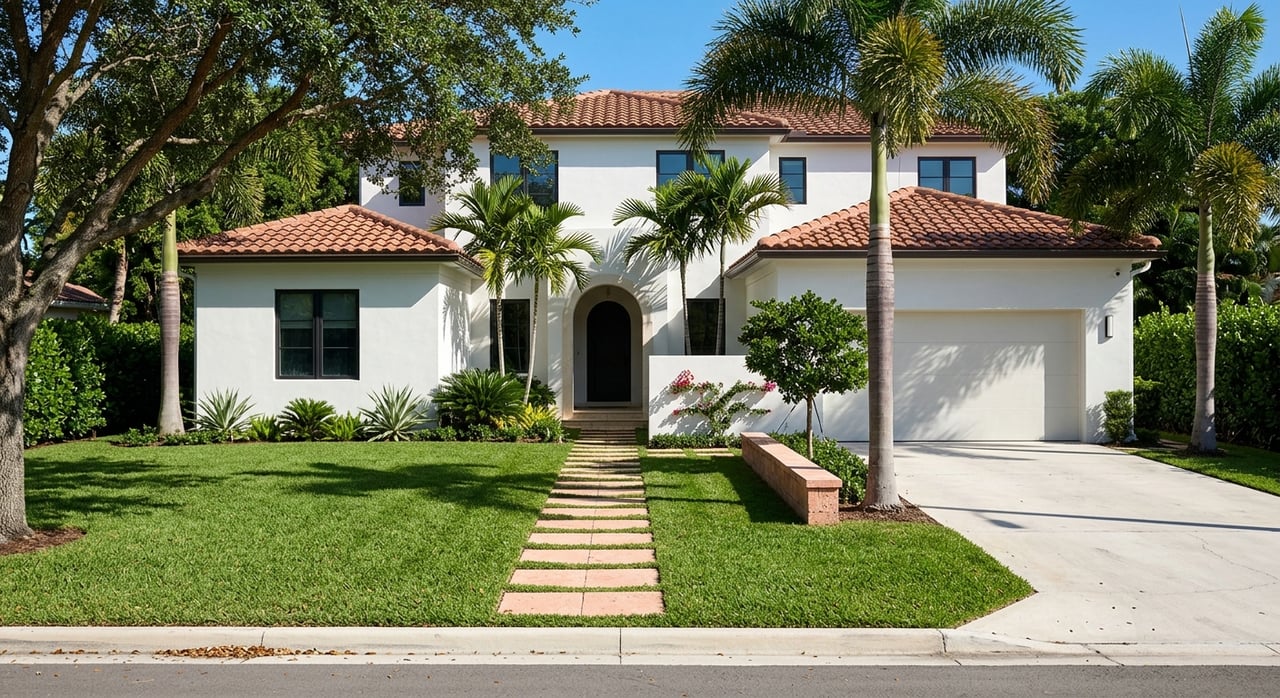
Palmetto Bay’s residential code is built around detached single-family living. In the R-1 district, the village requires a minimum lot size of 7,500 net square feet, a minimum house size of 1,125 square feet, and limits height to 35 feet and two stories. That framework helps preserve a lower-density, house-focused streetscape.
The estate-modified E-M district requires even larger lots, with a 15,000 net square foot minimum and at least 1,500 square feet of living area. It also limits lot coverage to 32 percent and preserves at least 68 percent open space. In practical terms, that means some parts of Palmetto Bay are designed to maintain larger yards and a more open look.
For you as a buyer, these rules matter because they shape the feel of the village. You are not generally shopping in a dense condo landscape here. Instead, you are looking at an area where single-family homes, outdoor space, and lower building heights define the experience.
What the Built Environment Feels Like
Palmetto Bay is not uniform in style, and that variety adds character. Local landmarks such as Thalatta Estate, a 1926 Mediterranean Revival residence, and the Perrine Community House, which dates to 1935 and includes Florida bungalow-style elements, reflect an older South Florida design story.
That does not mean every home looks historic, but it does show that the village has architectural depth. If you value a neighborhood that feels more rooted and less generic, this can be part of Palmetto Bay’s appeal. It blends an established suburban layout with touches of South Florida history and waterfront identity.
Parks and Outdoor Living
One of the clearest reasons Palmetto Bay attracts growing households is its park system. The village describes itself as the Village of Parks, and its Parks & Recreation department says the system includes seven recreational facilities. It is also expanding programming for youth, adults, and seniors, which adds to the area’s community-centered feel.
If your daily routine includes playground time, walks, sports, or simply having green space nearby, this part of Palmetto Bay deserves close attention. The public amenities are not an afterthought. They are part of how the village presents itself and how many residents experience it.
Coral Reef Park
Coral Reef Park spans more than 50 acres and offers a mix of open green space and active recreation. The park includes pineland preserve areas, a canal, playgrounds, tennis, pickleball, baseball, an exercise trail, and picnic areas.
For buyers, that range matters. It means one park can support very different needs, from weekend sports to a casual outdoor break. When you are evaluating where to live long term, access to flexible public space can make a real difference in daily life.
Palmetto Bay Park
Palmetto Bay Park is a 25-acre facility off US-1 with a skate park, six softball fields, a Boundless Playground, a recreation room, and a shaded loop path for walkers, joggers, and bicyclists. It is one more example of how the village leans into active, outdoor living.
If you want a location where recreation is built into the community fabric, this park helps make the case. It supports a range of ages and interests, and it adds to the village’s practical, everyday livability.
Bay Access and Nature
Thalatta Estate Park covers roughly four acres and offers direct Biscayne Bay access, a trail to the water’s edge, and a connection to the Old Cutler Bicycle Trail. That waterfront component gives Palmetto Bay a different texture than many inland suburban areas.
The Deering Estate adds even more depth. Located in Palmetto Bay, this 444-acre environmental, archaeological, and historic preserve on Biscayne Bay includes historic houses, birdlife, natural areas, and cultural programming. If you want your neighborhood choice to include meaningful access to nature and local history, Palmetto Bay has a strong case.
Community Spaces Beyond the Parks
Ludovici Park includes the Palmetto Bay Branch Library, an amphitheater, shaded walkways, and free wifi. The Perrine Community House serves as a renovated venue for community events. These places may not be the headline features in a home search, but they help round out the day-to-day experience.
For many buyers, that is important. A neighborhood is not only about the house itself. It is also about whether the surrounding places support connection, routine, and a sense of belonging.
Getting Around From Palmetto Bay
Palmetto Bay offers a suburban pace, but it is not cut off from the rest of Miami-Dade. The South Dade TransitWay extends from Dadeland South Metrorail Station to SW 344th Street and provides a mobility connection between the Miami Central Business District and Palmetto Bay.
For buyers who want alternatives to driving for some trips, that corridor matters. The South Dade Trail also runs about 22 miles through Palmetto Bay, ends at Dadeland South, and is designed to connect to The Underline. That strengthens bike and pedestrian access along the same route.
The village’s civic and recreation sites also cluster around US-1 and Old Cutler Road. As a result, Palmetto Bay can feel connected to Miami while still operating at a more residential pace. If you want space without feeling completely detached, this balance may be one of the area’s strongest points.
The Main Tradeoffs to Expect
No community is perfect for every buyer, and Palmetto Bay comes with clear tradeoffs. The same features that make it attractive, such as larger lots, lower density, and a strong ownership profile, also support higher ownership costs. Census QuickFacts estimates a median owner-occupied home value of $879,700.
Commute time is another factor to weigh carefully. The Census Bureau estimates a mean travel time to work of 35.3 minutes. Depending on where you work and how often you need to travel across the county, that may feel manageable or significant.
This is why it helps to think in terms of fit rather than hype. If your priority is maximizing space, outdoor access, and a village identity tied to parks and Biscayne Bay, Palmetto Bay may align well with your goals. If your top priority is a shorter commute or a denser, more urban setting, you may want to compare it carefully with other Miami-Dade options.
Who Palmetto Bay May Suit Best
Palmetto Bay can be a strong fit if you are looking for a detached home environment with room to grow. Buyers often focus on the combination of yards, lower-density streets, community parks, and access to outdoor recreation. That package can feel very different from more vertical or high-turnover parts of Miami-Dade.
It may also appeal to buyers who want a premium suburban setting with a clear local identity. The village branding, preserved landmarks, bay access, and public recreation system all contribute to a place that feels intentional and established. If that is what you want your next chapter to look like, Palmetto Bay deserves serious consideration.
When you are weighing neighborhoods in South Florida, context matters just as much as square footage. You want to understand not only what you can buy, but how a place will support your routine, priorities, and long-term plans. If you are considering a move to Palmetto Bay or comparing it with other South Florida communities, the team at Alex Miranda Group at ONE | Sotheby's International Realty® can help you evaluate the lifestyle, property options, and market fit with concierge-level guidance.
FAQs
What kind of housing is most common in Palmetto Bay?
- Palmetto Bay is largely built around detached single-family homes, with residential rules that support larger lots, lower heights, and more open space rather than a dense condo setting.
What makes Palmetto Bay appealing for growing households?
- Many buyers are drawn to Palmetto Bay for its ownership-focused housing profile, park system, outdoor recreation, bay access, and more residential pace within Miami-Dade.
What parks and outdoor spaces are in Palmetto Bay?
- Notable public spaces include Coral Reef Park, Palmetto Bay Park, Thalatta Estate Park, Ludovici Park, and the Deering Estate, each offering different mixes of recreation, nature, and community amenities.
What should buyers know about commuting from Palmetto Bay?
- Miami-Dade’s South Dade TransitWay connects the area to Dadeland South and the Miami Central Business District, while the South Dade Trail supports bike and pedestrian access, but the average commute is still estimated at 35.3 minutes.
Is Palmetto Bay a lower-density community in Miami-Dade?
- Yes. Local zoning and land-use patterns point to a low-rise, yard-forward housing environment that trades density for space, parks, and a more suburban village feel.