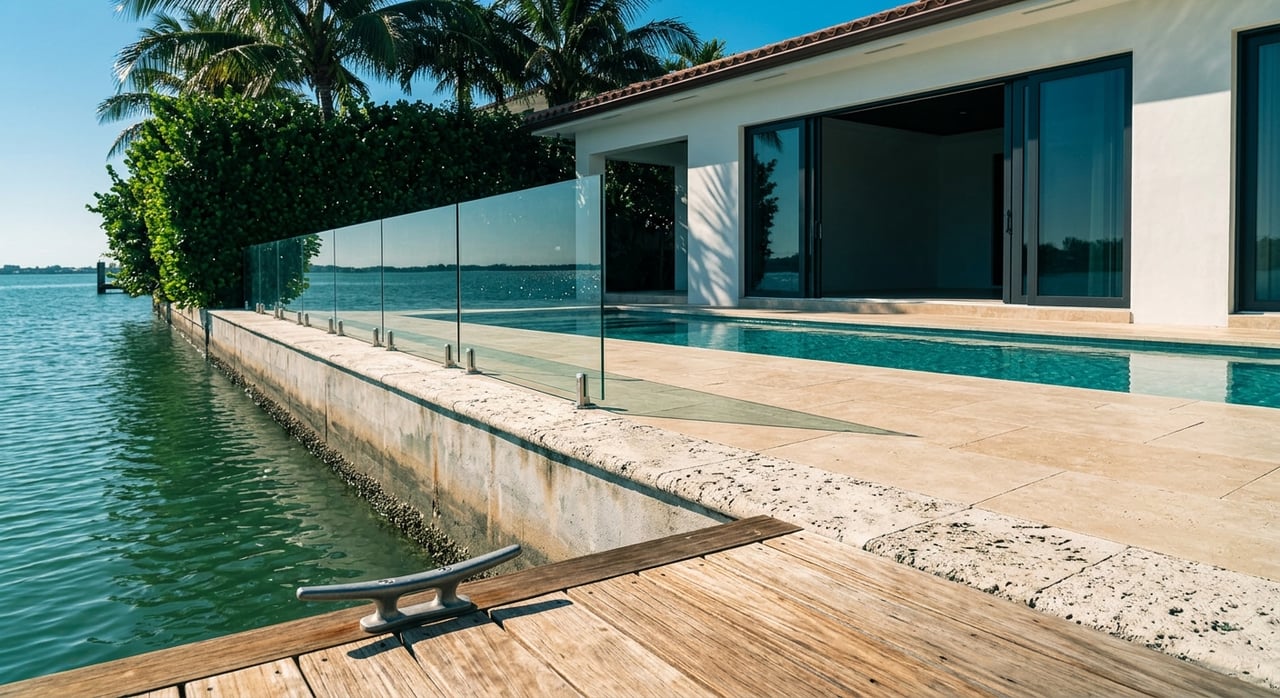
Buying a home on La Gorce Island is not the same as buying anywhere else in Miami Beach. When you are looking at an estate property here, details like gate access, waterfront approvals, flood-zone status, and renovation limits can shape your experience just as much as the home itself. If you want to buy with more clarity and fewer surprises, this checklist will help you focus on the issues that matter most. Let’s dive in.
Understand What La Gorce Island Is
La Gorce Island is recognized by the City of Miami Beach as a distinct sub-neighborhood. It also has a neighborhood association whose membership requires ownership of real property on the island, but the city notes that neighborhood associations are independent private organizations, not city departments.
That distinction matters when you are evaluating how the island functions day to day. You should confirm which services, rules, and expectations come from the city, which come from private operations, and which may be tied to ownership or association participation.
Confirm Gate Access in Writing
La Gorce Island is accessed through a guardhouse, but the city has stated that it is not a city-managed special taxing district and that its streets are public ways. In practical terms, that means you should not assume guest entry procedures, vendor access, or security operations work a certain way just because the island is gated.
Before you close, ask for written clarity on:
- Guest access procedures
- Vendor and contractor entry rules
- Delivery access
- Security contact protocols
- Any owner expectations tied to island entry operations
For many estate buyers, this is not a minor detail. It affects convenience, privacy, and how smoothly the property works for everyday living and entertaining.
Compare the Island to Nearby Luxury Enclaves
Miami Beach GIS identifies La Gorce Island, Allison Island, Palm and Hibiscus Islands, Sunset Islands, and the Venetian Islands as separate named sub-neighborhoods. That is useful because it lets you compare them based on structure and access, not just reputation.
If you are choosing between island enclaves, the right question is not simply which address sounds most familiar. The better question is which location best matches how you want to live, host, boat, and move through Miami Beach.
Focus on the Right Comparison Points
When comparing La Gorce Island with nearby areas, keep your attention on a few practical items:
- How dependent the home is on gate entry
- How much through-traffic the location may experience
- Whether the waterfront works for your intended boat use
- How the parcel orientation affects privacy and views
- How the island differs from nearby luxury corridors around La Gorce Drive, Pine Tree Drive, North Bay Road, and the golf club area
The broader La Gorce area sits between Biscayne Bay, Indian Creek, Surprise Waterway, and La Gorce Island, with three bridge connections serving the area. That larger geography can influence how protected, connected, or exposed a property feels depending on its exact position.
Check Lot Orientation and View Exposure
On La Gorce Island, not every estate lot delivers the same experience. Because the island sits within a water-surrounded Miami Beach setting rather than directly on open-ocean frontage, a property’s orientation can significantly affect its view package.
Depending on the lot, you may be buying for bay exposure, creek frontage, internal garden orientation, or golf-course adjacency. Those differences can also change privacy, light, and the relationship to neighboring homes.
Questions to Ask About the Parcel
Before you move forward, review the lot with these questions in mind:
- What is the primary view from the main living areas?
- Does the rear yard face open water, a narrower waterway, landscaping, or another home?
- How much privacy do the outdoor spaces actually offer?
- Where do neighboring homes sit in relation to windows, terraces, and pool areas?
- Does the orientation support sunrise light, sunset light, or both at different times of day?
For luxury buyers, this is often where value becomes personal. Two homes with similar square footage can feel very different once you study sightlines, exposure, and privacy on the ground.
Review Seawall and Dock Status Early
If you are buying a waterfront estate, the seawall and dock should be part of your first-round diligence, not an afterthought. In Miami Beach, seawalls are treated as special construction and require Miami-Dade County DERM approval in addition to a building permit.
The city also distinguishes floating docks from stationary docks. Its marine checklist requires DERM preliminary approval, structural plans showing seawall cap and dock elevations, and review by the Florida Department of Environmental Protection and the South Florida Water Management District.
Your Waterfront Checklist
Ask these questions as early as possible:
- Is the current seawall fully permitted?
- Is the current dock fully permitted?
- Was any work completed under older standards or approvals?
- Is any prior work considered grandfathered?
- If the seawall or dock needs replacement, will current approval requirements apply?
- Do the existing marine improvements support your intended use?
This matters because permit timing and future replacement costs can affect your ownership plan. It is also important to know that Miami Beach’s same-day permit path allows seawall repairs only, not docks, under that streamlined process.
Verify Flood Zone and Insurance Timing
Flood diligence is essential for any estate purchase in Miami Beach. Miami-Dade recommends confirming the property’s official flood zone through its interactive map or flood-zone hotline, and the county notes that flood insurance is required for federally backed mortgages in a Special Flood Hazard Area.
There is also a timing issue many buyers miss. Miami-Dade notes a 30-day waiting period before flood coverage starts, so this is something to review well before closing and occupancy planning.
Use Current Local Mapping
Miami Beach states that its detailed digital flood maps reflect current risk, and that preliminary FEMA maps are not yet effective. That means your diligence should rely on the currently recognized local mapping, not on assumptions about future map changes.
For a buyer, the practical questions are straightforward:
- What flood zone is the property currently in?
- Will financing require flood insurance?
- What are the likely insurance timing and documentation needs?
- How could floodplain rules affect future renovation plans?
Understand Renovation Limits Before You Buy
Many La Gorce Island buyers are not looking for a full teardown. You may be planning a light refresh, a design-forward remodel, or a phased update over time. In Miami Beach, the difference between cosmetic work and major compliance work can be significant.
The city explains that the permit process generally runs from application to plan review to permit issuance to inspections. It also notes that plan review often takes two to three cycles, and that new construction or major remodeling requires a Certificate of Occupancy or Certificate of Completion before occupancy.
Watch the FEMA 50% Rule
For older estate homes, one of the biggest diligence points is Miami Beach’s FEMA 50% Rule. The city states that if cumulative permit values over a one-year period divided by the property value equal or exceed 0.50, the structure is treated as substantially improved.
If that threshold is reached, the home must be brought into compliance with new-construction floodplain and building requirements. In simple terms, a renovation that begins as an update can become a much larger compliance project depending on scope and timing.
Ask These Renovation Questions
If you plan to remodel, ask your team to investigate:
- What work was previously permitted on the home?
- How close might a new project come to the 50% threshold?
- Are you planning cosmetic updates or a substantial improvement?
- Will new windows and doors need to meet current wind and impact standards?
- Will roofing work need to meet High Velocity Hurricane Zone requirements?
- Will the renovation timeline affect your move-in plans?
Also note that work over $5,000 requires a recorded Notice of Commencement. That is another reason to map the project path early rather than after closing.
Distinguish Lifestyle Appeal From Transaction Risk
La Gorce Island has strong lifestyle appeal, but smart buyers know how to separate emotional pull from due diligence. A beautiful arrival, a dramatic waterfront setting, or a large parcel can absolutely be part of the value, but those features should be matched with a clear understanding of access, approvals, flood exposure, and future flexibility.
That is especially true if you are buying a second home or making a purchase from outside the area. The more complex the estate, the more important it is to verify how the property functions in real life, not just how it shows during a tour.
Your La Gorce Island Estate Buyer Checklist
Use this short checklist as you evaluate a property:
- Confirm the exact location within La Gorce Island versus nearby luxury corridors
- Verify how gate access and guest entry actually work
- Review parcel orientation for views, privacy, and light
- Confirm waterfront usability for your intended boating needs
- Check whether the seawall and dock are fully permitted
- Verify the current flood zone through Miami-Dade resources
- Review flood insurance requirements and timing
- Ask about prior permits and renovation history
- Evaluate whether planned work could trigger the 50% Rule
- Confirm current code requirements for windows, doors, and roofing if remodeling
- Plan for permit review cycles and occupancy timing on major work
A smooth purchase usually comes down to the quality of your questions before you go hard on a property. On La Gorce Island, those questions should be specific.
If you are considering an estate purchase in this part of Miami Beach, the right guidance can help you weigh lifestyle goals against property realities with confidence. For tailored buyer representation and concierge-level local insight, connect with Alex Miranda Group at ONE | Sotheby's International Realty®.
FAQs
What should buyers confirm about La Gorce Island gate access?
- Buyers should confirm guest access, vendor entry, delivery procedures, and security operations in writing because the island is accessed through a guardhouse, but its streets are public ways and the gate setup should not be assumed.
What should buyers review for a La Gorce Island waterfront home?
- Buyers should review whether the seawall and dock are fully permitted, whether older work was grandfathered, and whether future replacement would trigger current city and environmental approval requirements.
What flood issue matters most when buying on La Gorce Island?
- Buyers should verify the property’s current official flood zone and understand that flood insurance may be required for federally backed mortgages in a Special Flood Hazard Area, with a 30-day waiting period before coverage starts.
What is the Miami Beach 50% Rule for estate renovations?
- The city states that if cumulative permit values over a one-year period divided by the property value equal or exceed 0.50, the structure is treated as substantially improved and must meet new-construction floodplain and building requirements.
What permit timing should La Gorce Island buyers expect for major work?
- Miami Beach says the permit process typically includes application, plan review, permit issuance, and inspections, and plan review often takes two to three cycles for major projects.
How is La Gorce Island different from other Miami Beach island neighborhoods?
- La Gorce Island is one of several separately recognized Miami Beach island sub-neighborhoods, and buyers should compare it with others based on access, traffic exposure, waterfront usability, parcel orientation, and privacy rather than name recognition alone.